Aura medallion
Choose your option


Chagall bridle with raised bridge headpiece and rein
Choose your option


Essential bridle with anatomical headpiece, no noseband, and reins
Choose your option


Manet bridle with raised bridge headpiece and rein
Choose your option


No More Sidepull leather bridle
Choose your option


Rubber reins with small studs and stoppers
Choose your option


Rubber reins small studs
Choose your option


Rubber micro-stud reins with stops
Choose your option


Raphaël bridle with anatomical headpiece and reins
Choose your option


Biotack® Sidepull Bridle
Choose your option


Essential comfort bridle without noseband with reins
Choose your option


Smooth leather reins
Choose your option


Mosaic browband
Choose your option


Rubber grip reins with large studs
Choose your option


Super grip reins with stoppers
Choose your option


Matisse Anatomical Bridle with Reins
Choose your option


Biotack® Rubber Reins with Large Grips
Choose your option


Ultra-grip reins with stoppers
Choose your option

Biotack® Reins and Yellow Large Studded Rubber
Choose your option


Softy Reins with Stops
Choose your option


Webbing reins with 5 stops
Choose your option

Square eye swivel snap hook brass
Choose your option


Hopper anatomical bridle with reins
Choose your option


Smooth Biotack® Reins
Choose your option


Biotack® Bridle
Choose your option

Nickel-plated steel snap hook
Choose your option


Blue Biotack® Sidepull Bridle
Choose your option


Pirelli training aid
Choose your option


Draw reins leather and rope
Choose your option


Leather and nylon gag cheekpieces
Choose your option


Howlett training aid
Choose your option


Diamond Browband
Choose your option


Smooth super grip reins
Choose your option


Kessel Classic Bridle with Reins
Choose your option


Elastic breast collar
Choose your option
Frequently Asked Questions
Does "tack" only include bridles?
Does "tack" only include bridles?
Can you mix different bridle elements?
Can you mix different bridle elements?
Should bridling evolve over time?
Should bridling evolve over time?
Bridlework
Bridlework: all the head and control equipment for the horse
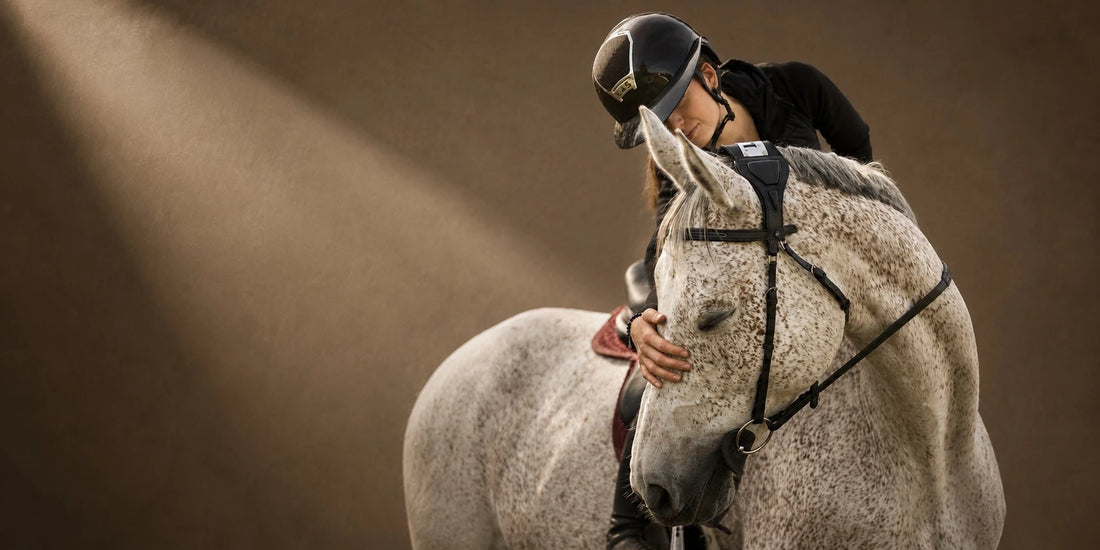
Bridlework encompasses all the equipment used to direct, guide, and work with the horse, both in-hand and ridden. It includes essential communication elements (bridles, reins, training aids) as well as bridlework accessories designed to fine-tune adjustments, improve comfort, or repair equipment. It is a central part of horse equipment, where each piece plays a precise role in the quality of contact, the accuracy of aids, and the respect for the horse's anatomy.
What is bridlework for?
Bridlework allows for:
• transmitting aids clearly and consistently,
• adapting the work to the level of the horse and rider,
• choosing between action with a bit or bitless,
• ensuring comfort, stability, and safety,
• evolving the equipment according to the type of work.
Each bridlework element must be chosen carefully, as it directly influences rider-horse communication.
Bridles and double bridles
Bridles and double bridles form the basis of ridden bridlework. These include:
• classic bridles with a bit,
• sidepull bridles, with lateral bitless action,
• bitless bridles, with indirect bitless action,
• double bridles, used for more advanced dressage work.
The choice depends on the discipline, the pair's level, and the horse's sensitivity. Double bridles and bridles come in many colors and details to suit each rider's preferences.
Reins and training aids
Reins provide a direct connection between the rider's hand and the horse's head. Training aids assist with work occasionally, in-hand, on the lunge, or ridden. Training aids include:
• lungeing training aids (Pirelli, nylon, rope),
• German reins, used when ridden,
• gogues and Howlett (Thiedeman),
• martingales,
• breastplates and hunting breastcollars, dedicated to saddle stability.
Each system has a specific mode of action that must be understood before use.
Lunge lines, long reins, and in-hand work
In-hand work is an integral part of bridlework. It includes:
• lunge lines for circle work,
• long reins for more technical work along a straight line,
• the cavesson, used for lungeing or working without action on the mouth.
This equipment allows for precise and progressive work, without a rider.
Browbands and aesthetic elements
Browbands contribute to the stability of the bridle while adding an aesthetic dimension. They allow for personalizing bridlework without altering its function, while adapting to different head morphologies. Whether you are looking for a rhinestone browband, glitter browband, simple leather browband, braided, or raised, we have a wide selection of browbands to offer you to accessorize your bridle.
Bridlework accessories: adjust, protect, repair
Bridlework accessories allow for refining existing equipment. They include:
• fastening and adjustment elements (keepers, forks, attachments),
• comfort accessories (sheaths, poll protectors, nose protectors, rein protectors),
• spare parts (nosebands, cheek pieces for bridles and double bridles, crossed noseband rings),
• specific elements like blinkers.
They play a key role in horse comfort and equipment durability.
Biotack Bridlework
Biotack bridlework includes equipment designed from a technical synthetic material, appreciated for its resistance, ease of maintenance, and use in humid or intensive conditions. It offers a wide choice of bridles, reins, training aids, halters, hunting breastcollars, and German reins in Biotack, available in many colors to suit all tastes.
Snap hooks and buckles
Snap hooks and buckles are indispensable parts for:
• repairing bridlework,
• replacing a worn element,
• manufacturing or adapting equipment.
Sold individually or in pairs, these parts allow for a sustainable and economical approach to equipment maintenance.
Bridlework adapted to the horse and the work
Bridlework is not static. It evolves according to:
• the horse's level,
• its comfort,
• the type of work,
• the rider's objectives.
Choosing the right elements allows for finer communication and more respectful work.
A central part of horse equipment
Bridlework brings together all the elements that structure the relationship between the rider's hand and the horse's head. Well-chosen, well-adjusted, and well-maintained, it becomes a true tool for precision and comfort.