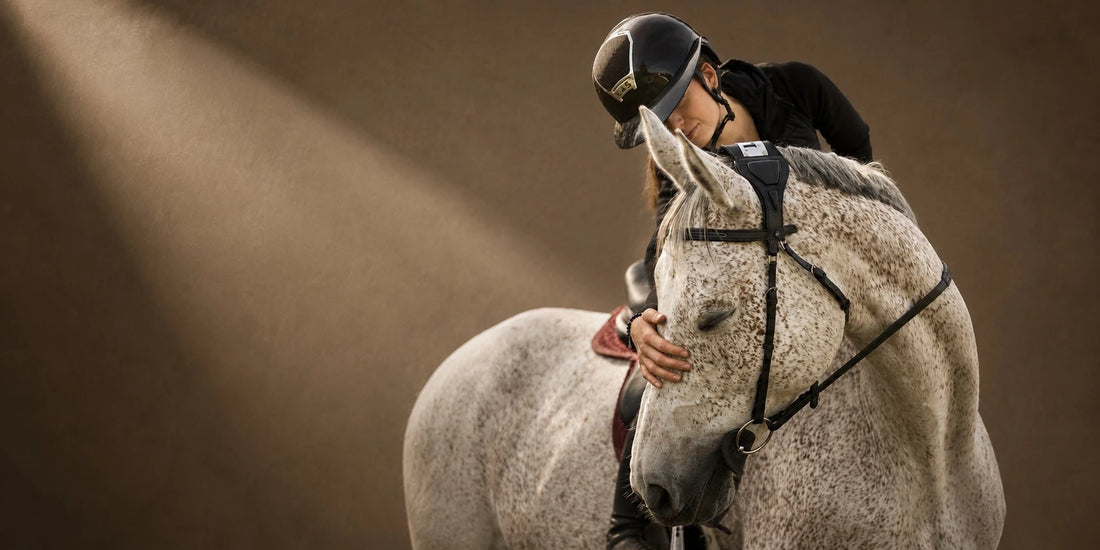
Fontainebleau show jumping saddle pad, chocolate/beige
Choose your option


Air Mesh 2 orange saddle pad
Choose your option


Claude beige hunter saddle pad
Choose your option


Claude brown hunter saddle pad
Choose your option


Hunter saddle pad Claude black
Choose your option


Claude Bordeaux hunter saddle pad
Choose your option


Claude marine hunter saddle pad
Choose your option


Air Mesh 2 Saddle Pad Bordeaux
Choose your option


Air Mesh 2 Grey Saddle Pad
Choose your option


Air Mesh Saddle Pad 2 Navy
Choose your option


Air Mesh 2 Saddle Pad Brown
Choose your option


Diane white dressage saddle pad
Choose your option


Diane black dressage saddle pad
Choose your option


Show jumping saddle pad Fontainebleau burgundy/ white
Choose your option


Show jumping saddle pad Fontainebleau grey/white
Choose your option


Fontainebleau show jumping saddle pad grey/red
Choose your option


Navy/beige Fontainebleau show jumping saddle pad
Choose your option


Show jumping saddle pad Fontainebleau navy/burgundy
Choose your option


Fontainebleau show jumping saddle pad black/white
Choose your option


Black/burgundy Fontainebleau show jumping saddle pad
Choose your option


Suede chocolate/beige Fontainebleau show jumping saddle pad
Choose your option


Suede Jumping Saddle Pad Fontainebleau Navy/Beige
Choose your option

Theresa White Show Jumping Saddle Pad
Choose your option

Therese show jumping saddle pad, burgundy
Choose your option

Thérèse Navy Show Jumping Saddle Pad
Choose your option

Show jumping saddle pad Thérèse brown
Choose your option

Thérèse Show Jumping Saddle Pad black
Choose your option

Showjumping saddle pad Thérèse red
Choose your option
Frequently Asked Questions
Can a dressage pad be used with an all-purpose saddle?
Can a dressage pad be used with an all-purpose saddle?
Does quilting affect comfort?
Does quilting affect comfort?
Can a western pad be used with an English saddle?
Can a western pad be used with an English saddle?
Saddle pad
Saddle pads: comfort, protection, and style for every discipline
The saddle pad is a central piece of horse equipment. Placed between the saddle and the horse's back, it ensures both back protection, sweat management, saddle stability, and the horse's comfort during work. There isn't one universal pad, but rather pads designed to suit different disciplines, saddle shapes, and usage conditions. The choice of a pad should always be consistent with the equestrian practice and the horse's build.
Why is the choice of saddle pad crucial?
A well-adapted saddle pad allows for:
• limiting friction between the saddle and the back,
• absorbing and wicking away sweat,
• preserving the saddle,
• promoting a more even distribution of pressure.
Conversely, a poorly chosen pad can create folds, pressure points, or hinder the proper positioning of the saddle. The saddle pad is therefore primarily functional equipment, which should be chosen first and foremost according to its use.
The different types of horse saddle pads
Dressage pads
Dressage pads are designed for saddles with long, straight flaps. Their specific cut allows them to properly cover the contact surface of the saddle and ensure good stability during flatwork. This shape is not suitable for all-purpose or jumping saddles, as it could be poorly positioned and create folds under the saddle.
Hunter pads
Hunter pads are distinguished by their very specific cut, designed to be as discreet as possible. The goal is for the saddle to be visually highlighted, with the pad almost unnoticed. They align with the simplicity and elegance characteristic of the discipline, while retaining essential protection and comfort functions.
All-purpose/Show jumping pads
All-purpose/Show jumping pads are suitable for jumping saddles and all-purpose saddles, which have shorter, more forward flaps. They offer:
• good leg freedom,
• stable positioning under the saddle,
• great versatility in training and competition.
This is one of the most common formats in show jumping.
Mesh pads
Mesh pads are designed to promote maximum ventilation under the saddle. Their design allows for:
• better heat dissipation,
• quick drying,
• reduced humidity.
They are particularly appreciated in warm weather or for horses that sweat a lot, provided their shape is adapted to the saddle used.
Trail pads
Trail pads are designed for prolonged use, over several hours. They prioritize:
• long-term comfort,
• sweat management,
• back protection over long distances.
They are suitable for long rides, treks, and regular outdoor riding.
Western pads
Western pads are specifically designed for western saddles, whose shape, contact surface, and weight differ significantly from classic saddles. They ensure:
• extensive back protection,
• good pressure distribution,
• effective sweat absorption.
Their format and design are not compatible with classic saddles.
Sheepskin pads: comfort and elegance
Some pads incorporate real or synthetic sheepskin, visible or not. Beyond aesthetics, these models provide:
• additional comfort,
• better friction management,
• a high-end finish.
They are often chosen to combine functionality and elegance.
The saddle pad: technical equipment that has also become a style element
Today, the saddle pad is also a true fashion accessory. It plays a full role in the visual identity of the horse-rider pair, both in training and in competition. Brands offer a wide variety of styles, allowing for the creation of coordinated sets with bonnets, boots, or protectors.
Quilting, padding, and finishes
The style of a pad is expressed notably through its quilting, which can take different forms: small squares, diamonds, large checks, braided, etc. While the shape of the quilting is primarily aesthetic, the quality and density of the padding play a real role in comfort and pressure distribution. Finishes also contribute to the visual appeal: simple or contrasting piping, galloons, embroidery, or decorative topstitching—the choice is wide!
Choosing a pad adapted to the discipline and saddle
The choice of a saddle pad depends mainly on:
• the discipline practiced,
• the type of saddle,
• the duration of work,
• the horse's sensitivity.
Style should never take precedence over technical suitability: an aesthetic pad must remain perfectly adapted to the saddle and its use.
A key element between performance and aesthetics
The saddle pad is not just a decorative accessory. Well-chosen, it contributes to the horse's comfort, saddle stability, and quality of work, while allowing the rider to express their style.